Nobody's Actually Watching Your Show — They're Half-Watching It While Scrolling TikTok
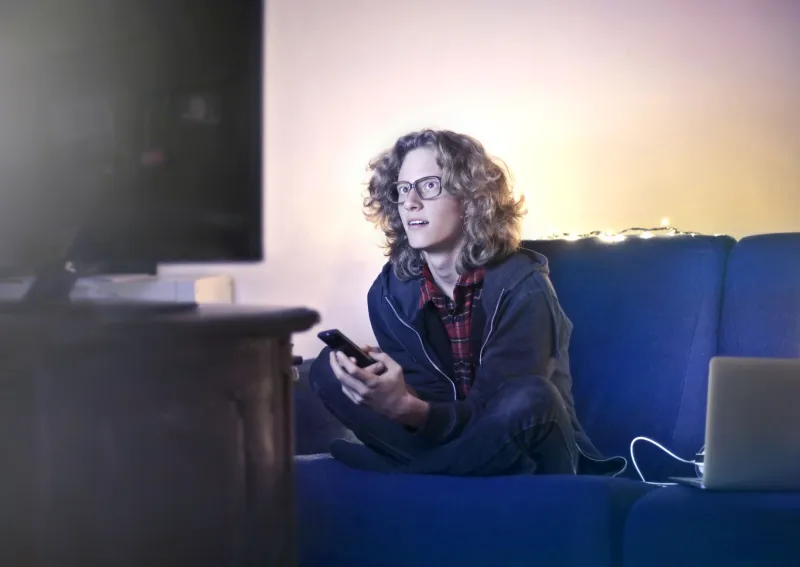
Be honest. When's the last time you watched something — really watched it, eyes forward, phone face-down — for a full hour without checking your notifications? If you're struggling to remember, you're not alone. You're basically everyone.
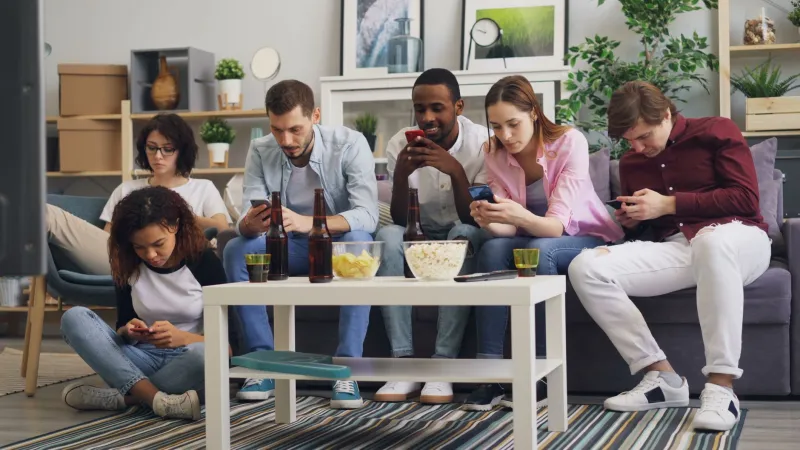
A 2023 study found that over 80% of Americans use a second screen while watching television. Not occasionally. Regularly. As in, it's the default mode of consumption for most people most of the time. We've quietly normalized watching TV the way we used to listen to the radio — as background noise to accompany whatever else we're actually doing.
For the entertainment industry, this is somewhere between a creative crisis and a full-scale business emergency. And the responses have ranged from genuinely innovative to kind of desperate.
How We Got Here
This didn't happen overnight, and it definitely wasn't planned. The smartphone and the streaming boom arrived at roughly the same time, and they created a feedback loop nobody fully anticipated.
Streaming eliminated the structure that kept viewers anchored to a single screen. When you had to physically be in front of a TV at 9 p.m. on a Thursday to catch a show, the social stakes of the viewing experience were higher. You were present or you missed out. That urgency created focus.
On-demand viewing removed that urgency entirely. You can pause, rewind, and watch at 1.5x speed. Nothing is going to disappear. The pressure is gone, and with it went a lot of the attentiveness that old-school TV relied on.
Simultaneously, social media platforms engineered their apps to be compulsive in ways that no television show can match. The variable reward structure of an Instagram feed or a TikTok scroll is, from a neurological standpoint, extremely hard to compete with. A prestige drama asking you to follow a slow-burn subplot for 40 minutes is genuinely fighting an uphill battle against an infinite scroll of 15-second dopamine hits.
So here we are. Two screens, split attention, and an entire industry trying to figure out what to do about it.
The Panic Is Real, Even If Nobody's Saying It Out Loud
Hollywood and the major streaming platforms don't love talking about this publicly, but the behavioral data they're sitting on tells a pretty grim story. Internal engagement metrics — which measure things like pause rates, rewind frequency, and session abandonment — have been pointing toward declining active attention for years.
The response has been visible in how content gets made, even if the reasoning isn't always stated explicitly. Episode runtimes have gotten shorter across the board. Cold opens have gotten more aggressive — shows are hooking you in the first 90 seconds or losing you entirely. Dialogue has gotten snappier. Visual storytelling has gotten more kinetic. Nobody's making the slow-paced, contemplative drama of the early 2000s anymore, and part of that is a direct response to audience behavior.
Netflix famously uses what it calls "the two-minute rule" internally — if a show doesn't capture attention within the first two minutes, viewers bounce. That's not a creative philosophy. That's an engineering constraint.
For live entertainment specifically, the second-screen problem cuts even deeper. A live sports broadcast or a concert stream is competing with Twitter, Reddit, and every other platform where people are simultaneously discussing what they're watching. Ironically, the second screen is often showing more content about the thing on the first screen — which is both a problem and an opportunity.
What Creators Are Actually Doing About It
The smartest response to distracted viewing isn't fighting it — it's designing around it.
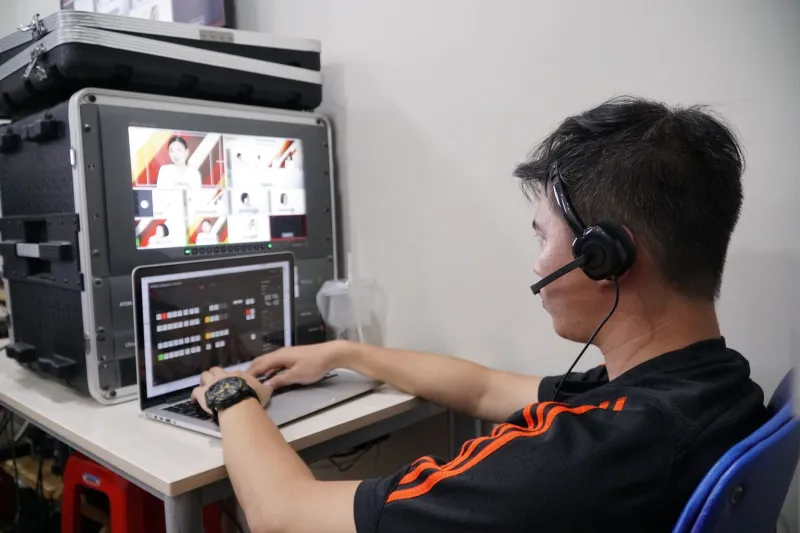
Live streaming platforms, including the kind of niche live content that JNeiPTV is built around, have a natural advantage here. Live chat, polls, interactive reactions, and real-time audience participation give viewers a reason to stay engaged that recorded content simply can't replicate. When you're watching a live stream and your comment appears on screen, suddenly you're a participant rather than a passive consumer. That's a fundamentally different psychological relationship with the content.
Twitch has understood this for years. The platform's chat culture — with its running jokes, emote reactions, and community in-jokes — functions as a second screen that's actually synchronized with the content rather than competing with it. Viewers aren't scrolling away; they're scrolling within the experience.
Broadcast television has been slower to adapt, but there are experiments worth watching. Some networks have built companion apps that offer live stats, trivia, and behind-the-scenes content synced to whatever's airing. Reality competition shows have leaned into live voting as a way to make the audience feel like their attention is literally consequential.
Short-form content creators have taken the most radical approach: just accept the attention span and build for it. The explosion of recap content — three-minute YouTube summaries of 10-episode seasons — suggests that a lot of viewers would rather consume a show's emotional highlights than sit through the whole thing. That's a wild thing for the entertainment industry to reckon with, but it's real.
The Interactive Content Arms Race
The next frontier is interactive content — programming where your choices actually affect what you're watching. Netflix's "Bandersnatch" was an early, high-profile experiment with this format, and while it was more of a novelty than a template, it pointed toward something genuinely interesting.
If viewers are going to have their phones in their hands anyway, the play is to make the phone part of the show. Live events are particularly well-suited to this. Imagine a live mystery broadcast where viewers vote on plot directions in real time, or a live sports analysis show where the audience submits questions that actually get answered on air. These aren't hypothetical — versions of them are already happening, mostly in the streaming and creator space.
The challenge is that interactive content is expensive and technically complex to produce at scale. It also requires a level of viewer commitment that may be hard to sustain beyond the novelty phase. But the directional pull is clear: content that demands participation is harder to half-watch than content that just asks you to sit there.
What This Means for the Way You Watch
Here's the part that doesn't get discussed enough: some of this is on us, the viewers.
The entertainment industry responds to behavior. If audiences consistently demonstrate that they'll watch something all the way through without their phones, that content gets made more of. If everything gets half-watched, everything gets optimized for half-watching — which means simpler plots, louder moments, more obvious emotional cues. The creative ceiling lowers.
There's a version of the future where genuinely challenging, patient, complex storytelling becomes a premium product — something you have to actively seek out and commit to — while the mainstream drifts toward content engineered for distraction. Some would argue we're already there.
For live entertainment, the stakes are different and arguably more hopeful. The live format has an inherent urgency that recorded content can't manufacture. A live performance, a live broadcast, a live conversation — these are things that are actually happening right now, and missing them means missing them. That urgency is a genuine asset in a media landscape drowning in on-demand options.
The second screen isn't going away. But the platforms and creators who figure out how to make it part of the experience rather than a competitor to it? They're the ones who are going to hold your attention. And in 2024, that's basically the most valuable thing in entertainment.