Thirty Seconds to Save the Show: What Really Happens Inside a Live Stream Control Room When Everything Goes Wrong
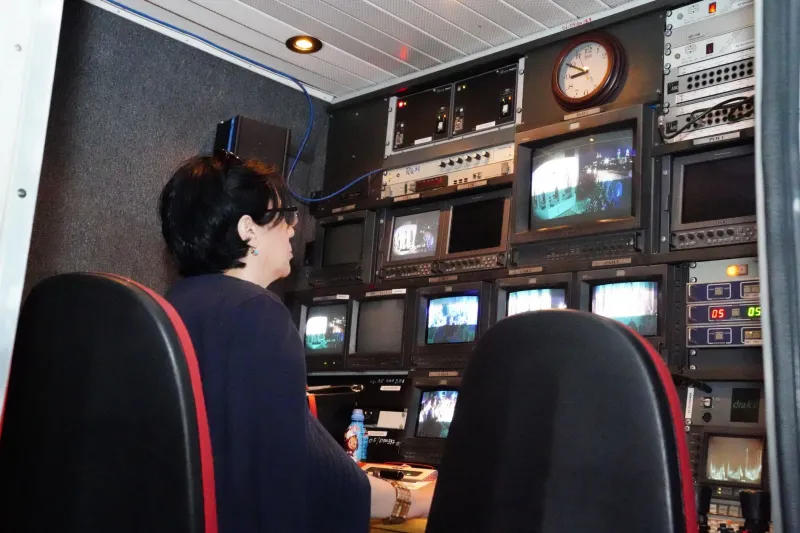
The stream looks effortless from your couch. Smooth transitions, clean audio, the host never missing a beat. What you don't see is the group of people behind that feed who are, at any given moment, one bad fiber route or one automated copyright flag away from a full meltdown. And when things go sideways, they have about thirty seconds before the audience notices — and maybe sixty before they start leaving.
We talked to producers, platform engineers, and control room operators who work on live streaming productions — from indie creator setups to mid-sized broadcast operations — to get the real story on what goes down when the feed goes dark.
The Anatomy of a Live Stream Failure
Not all stream failures are created equal. The people who manage live broadcasts have learned to categorize problems almost instinctively, because the response to a dropped frame is completely different from the response to a server-side outage.
"The first thing you're doing is triage," said one broadcast engineer who's worked on live sports and entertainment streams for over a decade. "Is this on our end? Is it the CDN? Is it a platform issue? Because if it's the platform, there's almost nothing you can do except communicate and wait. If it's on our end, you're switching to backup immediately."
Most professional live setups run redundant systems — backup encoders, secondary internet connections, sometimes a cellular bonding device that combines multiple LTE signals as a last resort. The goal is to have a fallback before the primary fails, not after. But even well-prepared operations get caught off guard.
"We had a show where our primary and backup both ran through the same building's ISP without us realizing it," one producer recalled. "Building lost power for forty seconds and we lost both feeds simultaneously. We went to a holding slate and I'm on the phone with the host trying to explain why they need to keep talking to a dead camera for the next four minutes."
The Copyright Strike Problem Nobody Warned You About
For creators streaming on major platforms — YouTube, Twitch, and others — one of the most disruptive and least predictable failure modes isn't technical at all. It's legal. Or rather, it's an automated system pretending to be legal.
Copyright detection bots scan live streams in real time, and they are not subtle. Play a song in the background of a live broadcast — even briefly, even at low volume, even music you have a license for — and an automated system can mute your audio, interrupt your stream, or in some cases, terminate it entirely. Mid-show.
"I've seen creators lose an entire live event because a DJ in the background of a venue was playing something the bot flagged," said one platform content manager who asked to remain anonymous. "The streamer didn't know, the venue didn't know, and by the time anyone figured out what happened, the stream was dead and the audience had already scattered."
Experienced live operators now build copyright avoidance into their pre-show checklist. That means pre-cleared music libraries for any ambient audio, venue agreements about what can and can't be played during a broadcast window, and sometimes a dedicated team member whose only job during a live show is monitoring the platform's automated flagging dashboard.
Split-Second Calls Under Pressure
What separates a clean recovery from an on-camera implosion is usually one thing: pre-planned decision trees. The best live operations don't improvise when something breaks — they execute a plan they already made.
"You don't want to be making decisions in the moment," explained a live production coordinator who works with mid-tier streaming talent. "You want to be executing decisions you already made at 2 PM in the production meeting. If the primary encoder dies, we go to backup. If backup dies, we go to cellular. If cellular dies, we go to a pre-recorded hold and start troubleshooting. That chain is agreed on before we go live. Nobody's debating it when the alarm goes off."
But plans only cover what you've imagined. The real skill is in handling the scenarios that weren't in the runbook.
One operator described a situation during a live Q&A stream where the host's internet connection failed but the platform kept showing a frozen frame rather than dropping the stream entirely. "The audience thought he was still there. They were asking questions, he couldn't see them, we couldn't communicate with him because his connection was down. We had a co-host jump in and start filling time while we got him on the phone through a cell call to tell him to restart his router. The whole thing took eleven minutes. On camera it looked like a planned segment break."
The Human Element Nobody Accounts For
All the redundant hardware in the world doesn't account for the human variables — a host who panics, a guest who freezes, a moderator who's never dealt with a dead feed before. Live streaming, especially at the creator level, often involves small teams where everyone is wearing multiple hats. The person managing the stream encoder might also be moderating chat and running the graphics. When something breaks, there's no cavalry.
"The number of times I've seen a creator just... stare at the camera while their stream is buffering for everyone else," one operator said with a laugh. "They don't know. Their local preview looks fine. They're doing the show. And the audience is watching a loading spinner."
This is why more sophisticated operations add a dedicated stream health monitor — someone whose only job during a live show is watching the actual viewer-facing output, not the production feed. It's a role that feels redundant until the moment it isn't.
What Viewers Actually Forgive
Here's the thing about live stream failures that might surprise you: audiences are more forgiving than operators expect — if the communication is fast and honest.
"People watching live understand that live is live," said one creator who's been doing live shows for six years. "What they don't forgive is silence. If your stream drops and you come back ten minutes later and pretend nothing happened, they're annoyed. If you come back and say 'our server crashed, here's what happened, we're back now' — they're usually fine. They actually respect it."
The worst outcomes tend to happen when teams try to hide the failure rather than address it, or when communication channels between the production team and the audience completely break down.
At JNeiPTV, where live content is core to what we do, that transparency principle isn't just good PR — it's audience retention. Viewers who feel like they're in on the chaos tend to stick around. Viewers who feel like they're being managed tend to click away.
The control room chaos is real. The recovery, when it works, is almost invisible. And that invisibility is the whole point.